If you are starting with cut pile, the AK-I is the cleaner beginner decision: it is the straightforward cut-pile option, with fewer moving parts to understand and fewer conversion decisions to make. The DUO is the better buy only when you want cut-and-loop flexibility from the start and are prepared to follow the exact manual for your machine version.
The practical difference is not just texture. It is how much setup you want to manage, how carefully you need to match pile-height range to your yarn and design, and whether you are comfortable checking scissor, opener, and wheel positions before every major adjustment.
What each machine is trying to do
The AK-I is a dedicated cut-pile tufting gun. Tuftingshop’s manual describes it as a cut/loop-capable family member in the broader AK range, but the AK-I page is centered on cut pile and gives the classic low-pile adjustment path beginners expect when they want a soft, trimmed finish.
The DUO is a combination machine. Its manual explains that it can switch between cut and loop by replacing the scissor with the loop head and re-positioning the related parts. That versatility is the point of the machine, but it also means the user must understand a little more of the mechanism before making changes.
For a first cut-pile rug, the safest rule is simple: if you do not need loop pile soon, the AK-I keeps the decision tree short. If you do want both textures, the DUO can do it, but only if you are willing to treat the manual as required reading rather than optional background.
Why beginners usually find the AK-I easier
The AK-I is easier for beginners because there is less switching. Tuftingshop lists it as a very easy machine to use, with a cut-pile focus and a more direct pile-height adjustment path than the multi-mode DUO. That matters when you are still learning yarn feed, cloth tension, and how hard to hold the gun against the frame.
With cut pile, the biggest beginner win is predictability. You can spend your attention on consistent strokes, even coverage, and neat edges instead of remembering which head, opener, or wheel position belongs to each mode. That lowers the chance of accidentally tufting loops when you meant to cut, or vice versa.
Beginners also tend to understate the value of a simple spare-parts plan. The more a gun is switched around, the more important it becomes to keep the exact model’s scissors and related parts matched to the machine, and to consult the manual before replacing anything that affects cutting.
What the DUO adds, and what it asks in return
The DUO is useful when you want one machine to make both textures. Tuftingshop’s manual for the AK DUO explains that moving between cut and loop involves changing the scissors for a loop head and then re-setting the machine so the loop mode runs neatly. That is practical, but it is not zero-effort.
The DUO also comes in different pile-height variants, so you must buy and set the right version rather than assuming every DUO behaves the same. The low-pile version is aimed at basic rug work, while the medium and high versions are built for deeper pile needs. Beginners should not treat those as interchangeable accessories.
The trade-off is clear: the DUO gives you more creative range, but it also introduces more ways to mis-set the mechanism. If you are learning on your first project, you may spend more time checking alignment and adjustment than you expected, especially after switching modes.
Pile height, yarn, and the beginner learning curve
For cut pile, pile height affects both look and handling. Tuftingshop’s AK-I manual shows the machine can be adjusted through a defined height range, while the DUO manual distinguishes between low-pile settings and higher variants. Beginners should choose the height the project actually needs, not the highest setting just because it sounds more forgiving.
Yarn choice matters just as much. Tufting-specific yarn is easier to feed cleanly and more likely to behave the way the machine expects. Thick or unsuitable yarn can cause cutting trouble, uneven tufts, or drag in the mechanism. If the yarn is not feeding smoothly, the machine is telling you to check the material before forcing the cut.
Detail work also changes with pile height. Lower pile gives cleaner edges and a flatter finish for graphic rugs, while higher pile can look softer but demands more control. A beginner who starts with modest pile height usually gets cleaner results than one chasing plushness on the first try.
Compatibility and spare parts are not optional details
The most important compatibility rule is not to assume that AK-series machines use the same internal parts in every version. Tuftingshop’s notes on the DUO say the low, medium, and high pile machines use different scissors, and the model-specific manuals are there for a reason. A beginner should match spares to the exact machine, not the family name.
That same caution applies to switching between cut and loop. The DUO manual describes a sequence that depends on the scissor opener, wheel position, and the installed head. If those parts are out of sync, the machine can jam, fail to cut, or produce rough loops. Hand-turning the machine before powering it is an essential check after any adjustment.
With the AK-I, the compatibility issue is simpler but not absent. If the machine is not cutting correctly, do not jump straight to improvising part swaps. Check the manual’s adjustment sequence first, then confirm yarn choice, and only then consider support or replacement parts.
Common beginner mistakes to avoid
The first mistake is buying the wrong machine for the actual project. If you only want cut-pile rugs, the DUO’s extra flexibility may be unnecessary complexity. If you want both textures but buy the wrong DUO pile variant, you may end up with a machine that does not suit the depth you planned.
The second mistake is changing settings without verifying the machine is unplugged and the manual-specific steps are being followed. The manuals repeatedly emphasize safe adjustment order, and that is where beginners often go wrong: they adjust by guesswork, then try to power through resistance that should have been corrected by setup.
The third mistake is ignoring the signs of bad alignment. Clicking, jamming, loose scissors, or a machine that no longer moves freely by hand are not normal “break-in” issues. They are signals to stop, recheck the setup, and consult the machine manual or seller support before continuing.
When the manual matters more than the model choice
For beginners, the manual matters most when changing pile height, switching cut to loop, replacing scissors, or troubleshooting cutting problems. Those are not the moments to rely on memory or a general tufting video, because the exact sequence differs by machine and by version.
It also matters when the machine arrived with a manual link, a digital showcase, or a seller-specific support path. If you are missing the manual, request the correct document for your exact model before making adjustments. That is especially important with DUO variants, where the low, medium, and high pile constructions are not the same.
Use the model page and manual as your reference point for all major changes. Once you understand the machine’s safe adjustment path, the choice between AK-I and DUO becomes much easier: pick the simpler cut-pile tool if that is your goal, and pick the more flexible DUO only if the extra setup work is worth the texture range.
Step-by-step instructions
Step 1: Choose the simpler path
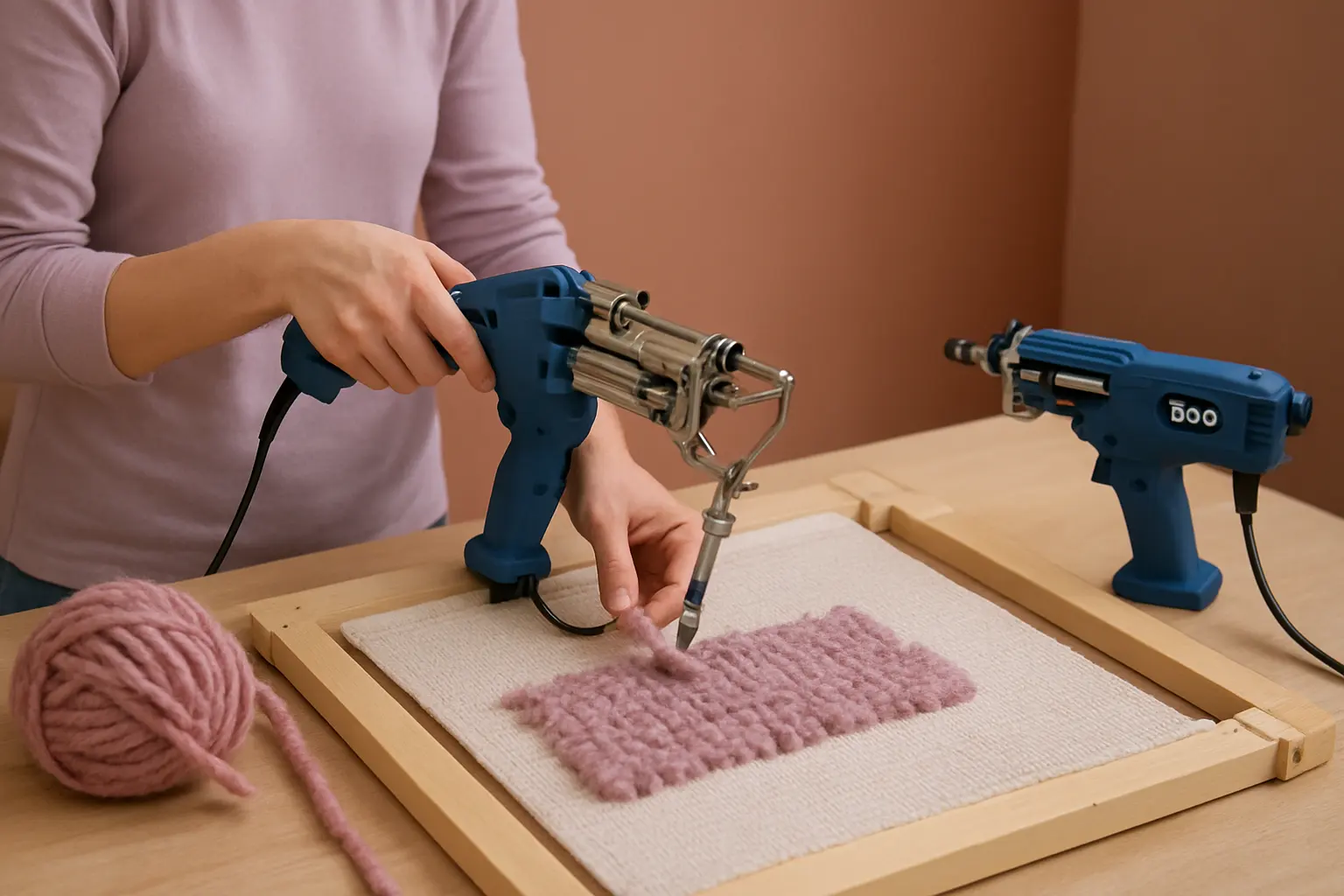
If your first priority is learning cut pile cleanly, choose the AK-I first and keep the project scope small: one rug, one yarn type, one pile height. That limits the number of variables you have to diagnose when the result is uneven.
Step 2: Match the exact machine version
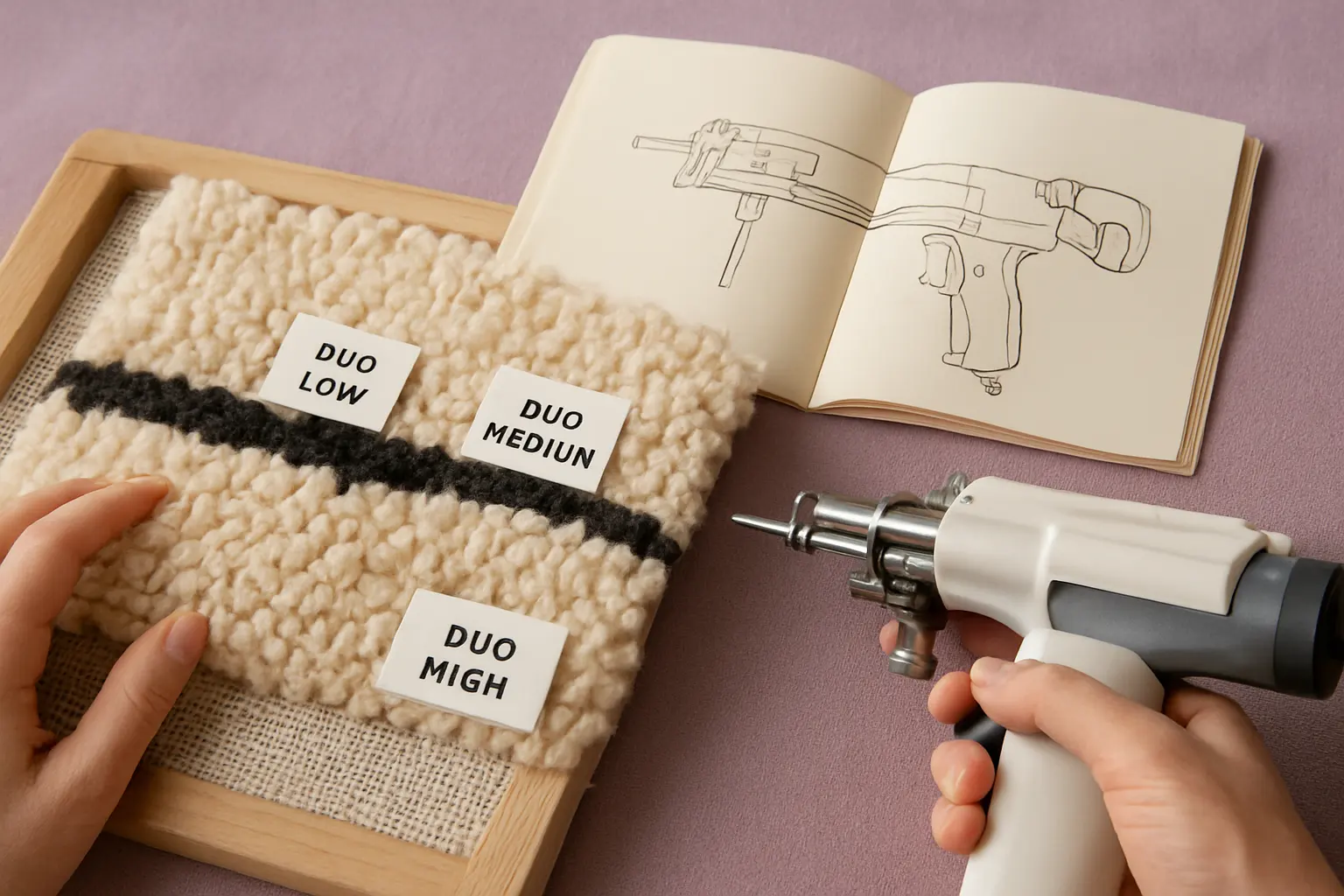
Before buying or replacing parts, confirm the exact model and pile-height variant. For the DUO, low, medium, and high versions are not interchangeable in practice, so the manual for your specific machine should guide every adjustment and spare-part choice.
Step 3: Set up before you change modes
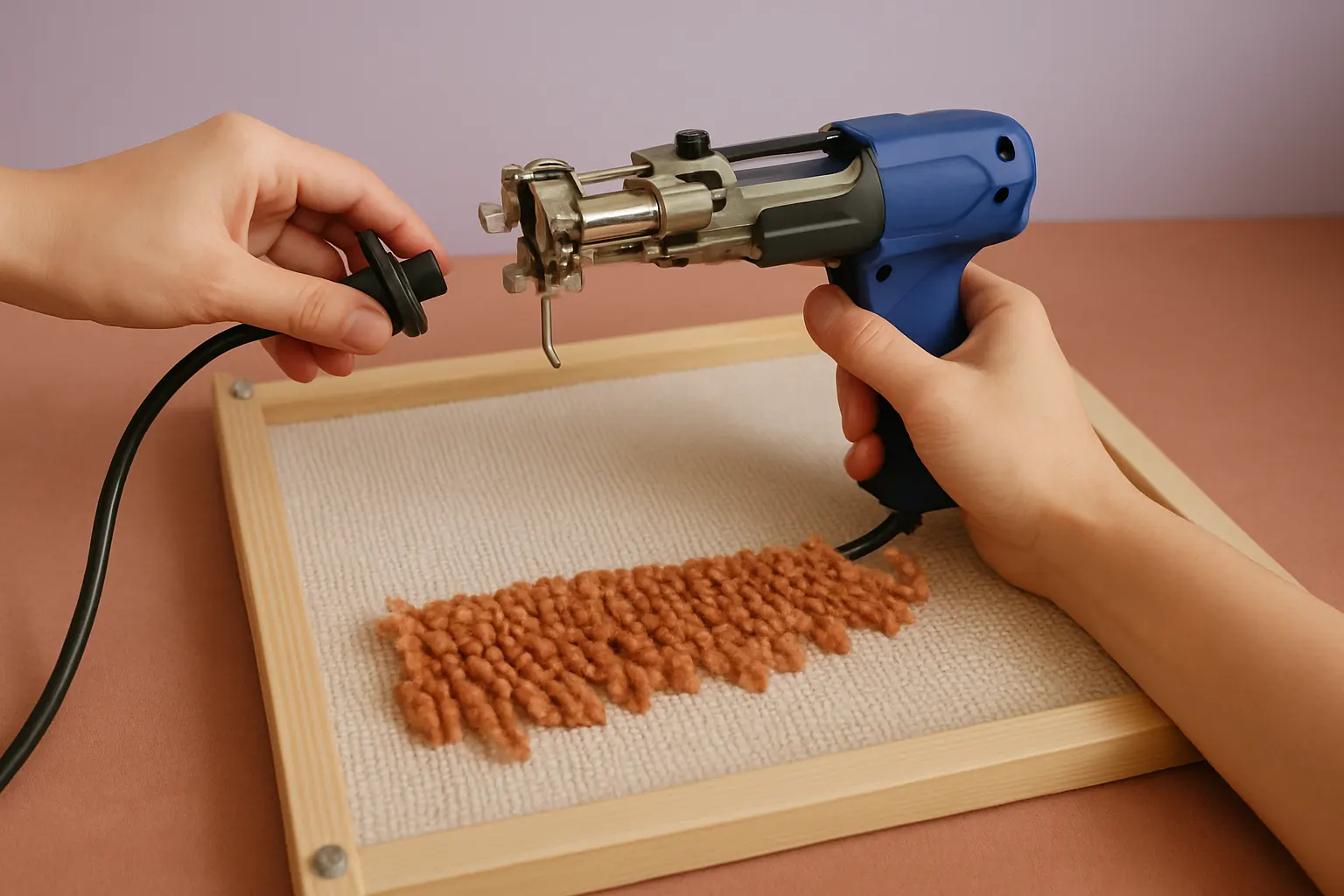
For any pile-height or cut/loop change, unplug the machine first, then follow the manufacturer sequence in the manual. After reassembly or adjustment, turn the machine by hand to confirm it moves freely before powering it on.
Step 4: Check yarn and cutting behavior
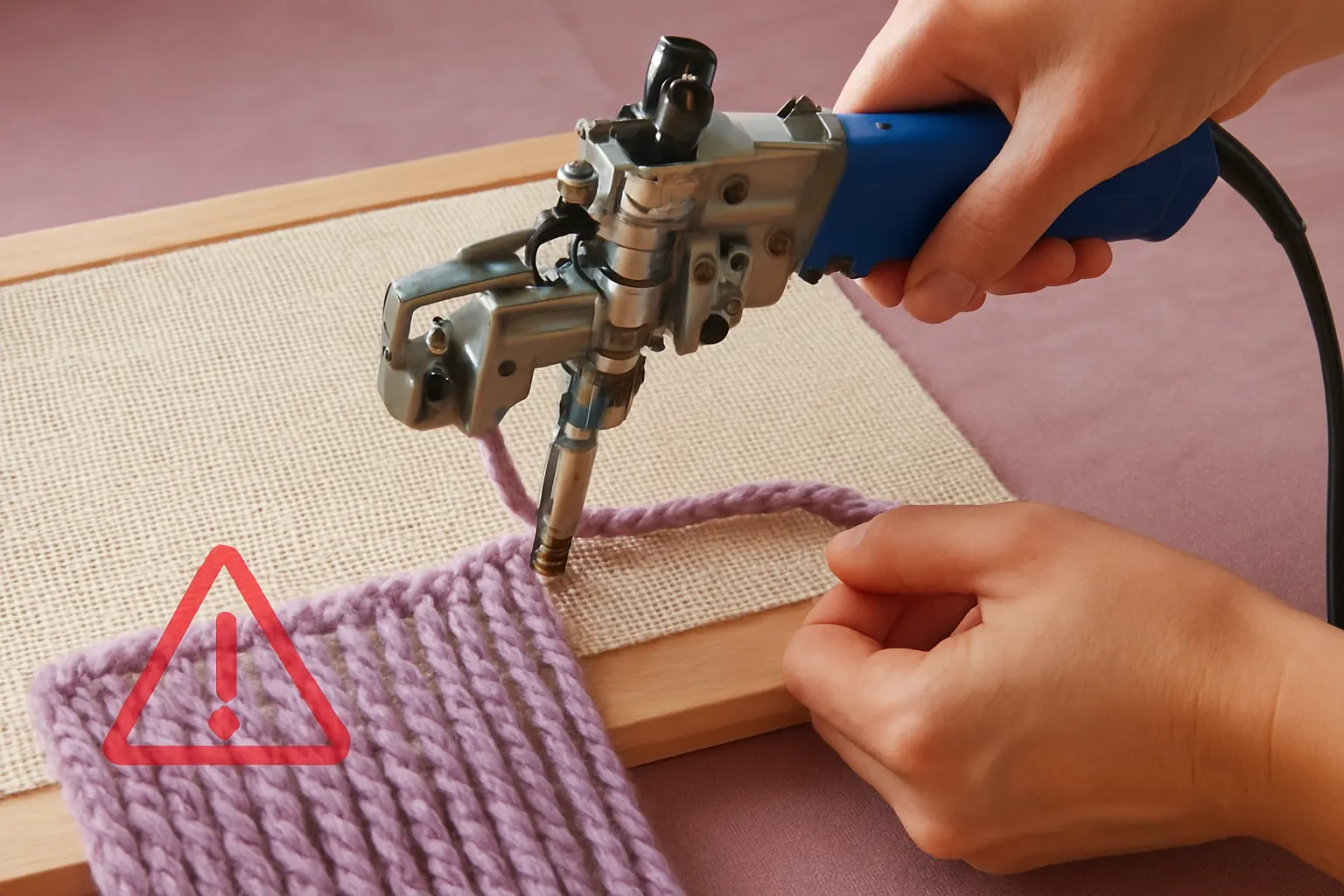
Use tufting-suitable yarn and watch the cut closely during the first pass. If the machine struggles to cut, do not force it; stop and check whether the yarn is too thick, the scissors are mis-set, or the opener and wheel positions need correction.
Step 5: Consult support when the machine protests
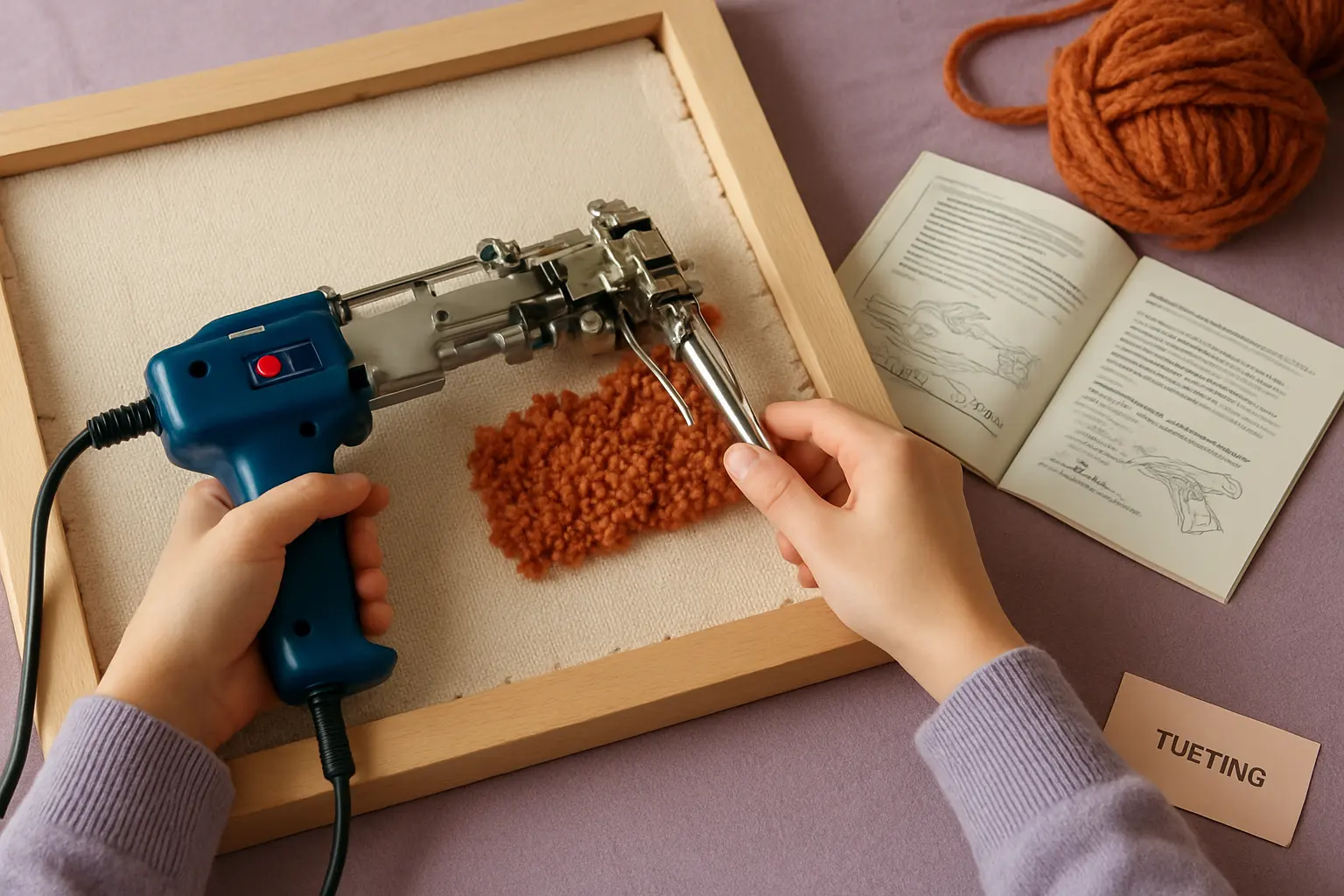
If you hear clicking, see jamming, or notice the scissors drifting out of position after a change, go back to the manual and seller support. Those are setup problems, not signs to keep tufting harder.
References and further reading
- Manual AK I – Tuftingshop tuftingshop.com
- Manual AK DUO – cut and loop – Tuftingshop tuftingshop.com
- Manuals – Tuftingshop tuftingshop.com
- Comparison Chart and Video – Tuft the World tufttheworld.com
- How do I adjust pile height or reset my tufting machine to factory settings? | Tuft the World tufttheworld.com
- White Gear & Mechanical Assembly Issues | Tuft the World tufttheworld.com